Abrasion vs skin tear: what's the difference?
 By Margaret Hale, Reunoa EditorialLast updated
The short answer
An abrasion is a scrape — the top layer of skin is rubbed away by a rough surface, leaving a raw, grazed area with no flap. A skin tear is a split in thin, fragile skin, often with a flap of skin that peels back. Skin tears mostly happen on aging forearms and shins; the flap should be eased back into place, not removed.
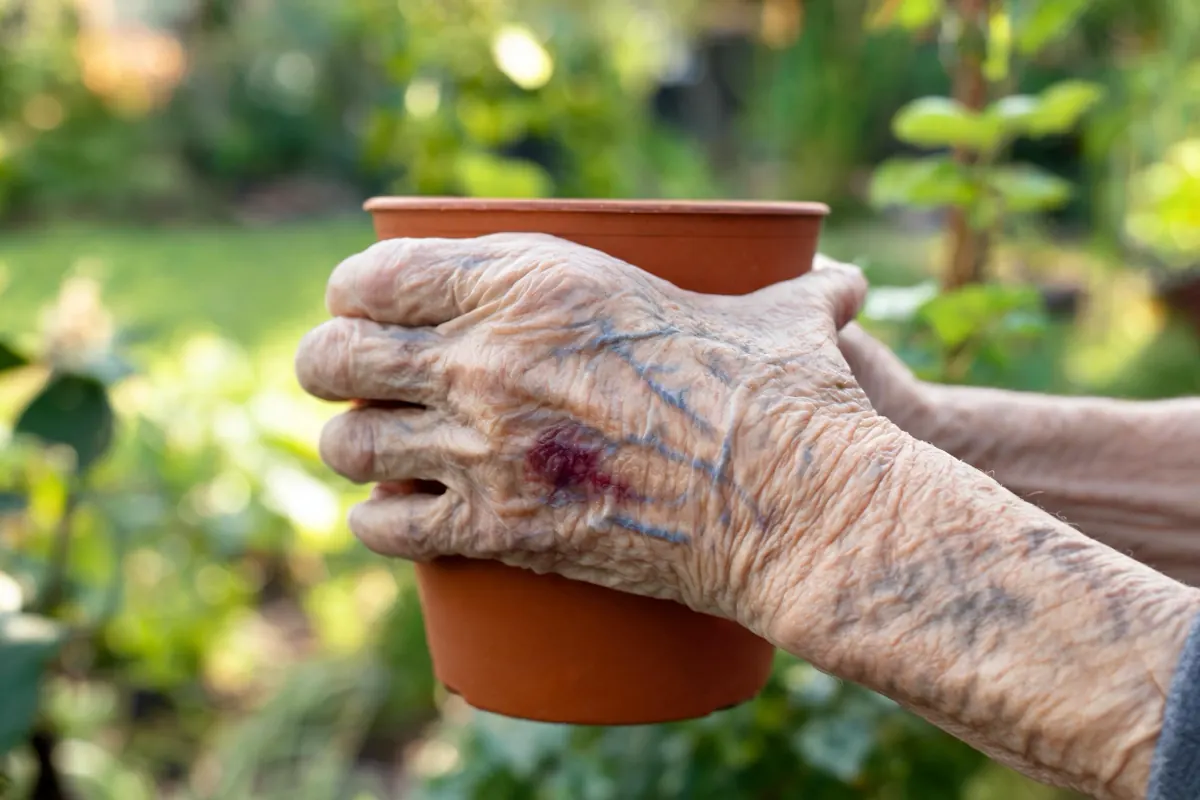
Both look like raw, bleeding skin, and both are common after a knock or a fall. But they happen differently, and the right first aid is not quite the same.
The quick difference
| Abrasion (graze, scrape) | Skin tear | |
|---|---|---|
| How it happens | Skin is rubbed along a rough surface — pavement, carpet, brick | A knock, friction, shear or tape removal splits fragile skin |
| What you see | A raw, grazed area, often with dirt and pinpoint bleeding | A linear split or a flap of skin that is rolled or peeled back |
| Flap? | No | Often yes (ISTAP Type 1 or 2) [1] |
| Who gets it | Anyone, any age | Mostly older adults with thin skin [4] |
| Key first aid | Clean thoroughly, remove grit, cover | Clean gently, put the flap back, non-stick dressing [2] |
Why the difference matters
With an abrasion, the main jobs are cleaning out dirt and keeping the area covered and moist while new skin grows over it [3].
With a skin tear, the main job is to save the flap. That piece of skin is the body's best dressing. Rubbing, scrubbing or cutting it away turns a Type 1 tear into a Type 3 and slows healing. Tape and sticky plasters are also more of a problem on the fragile skin around a tear [1].
Can it be both?
Yes. A fall on a rough path can graze one part of the arm and tear skin a few centimetres away. Treat each area on its own terms: clean the graze well, and handle the tear gently.
First aid in brief
Abrasion:
- Rinse well with clean water to wash out dirt and grit [3].
- Pat dry around the wound.
- Cover with a non-stick dressing; keep it moist.
Skin tear:
- Gentle pressure to stop bleeding.
- Rinse gently with water or saline — don't scrub.
- Ease the flap back into place with a damp cotton bud.
- Cover with a silicone non-stick dressing, mark the flap direction, secure with a tubular bandage [2].
Full guide: how to treat a skin tear.
Older skin: both heal more slowly
Whether it's a graze or a tear, aging skin repairs itself more slowly. Keep wounds covered, eat enough protein and drink enough fluids, and protect the area from knocks while it heals.
Frequently asked questions
Is a skin tear the same as an abrasion?
No. An abrasion is a scrape where the surface of the skin is rubbed away. A skin tear is a split in fragile skin, often with a flap. They need slightly different care.
Should I remove the loose skin from a graze or skin tear?
Don't cut away a skin flap from a skin tear — reposition it instead. For grazes, very small loose bits of dead skin can be left; a nurse or doctor can trim if needed.
Which heals faster, an abrasion or a skin tear?
A shallow graze on healthy skin often heals in one to two weeks. Skin tears on older skin commonly take two to four weeks, longer for Type 3 tears.
What is the best dressing for both?
A non-stick dressing that keeps the wound moist. For skin tears, silicone dressings are preferred because they come off without damaging fragile skin.
Sources
- LeBlanc K, Campbell KE, Wood E, Beeckman D Best Practice Recommendations for Prevention and Management of Skin Tears in Aged Skin: An Overview. Journal of Wound, Ostomy and Continence Nursing, 2018. PubMed 30395131
- Best practice recommendations for the prevention and management of skin tears in aged skin (ISTAP) — Wounds International.
- Cuts and puncture wounds — MedlinePlus Medical Encyclopedia.
- Aging changes in skin — MedlinePlus Medical Encyclopedia.
General information, not medical advice. Written by the Reunoa editorial team; Reunoa makes Bruise Defense & Repair Serum. See our editorial policy for how we pick sources and keep product mentions fair.