Paper-thin skin: why it happens and how to care for it
 By Margaret Hale, Reunoa EditorialLast updated
The short answer
Paper-thin skin is skin so thin you can see veins and tendons through it, often crinkly like tissue paper. It comes from aging, decades of sun and sometimes long-term steroids. It bruises and tears easily. Gentle cleansing, twice-daily moisturizer, daily sunscreen, long sleeves and — if tolerated — a mild retinoid help protect and strengthen it.
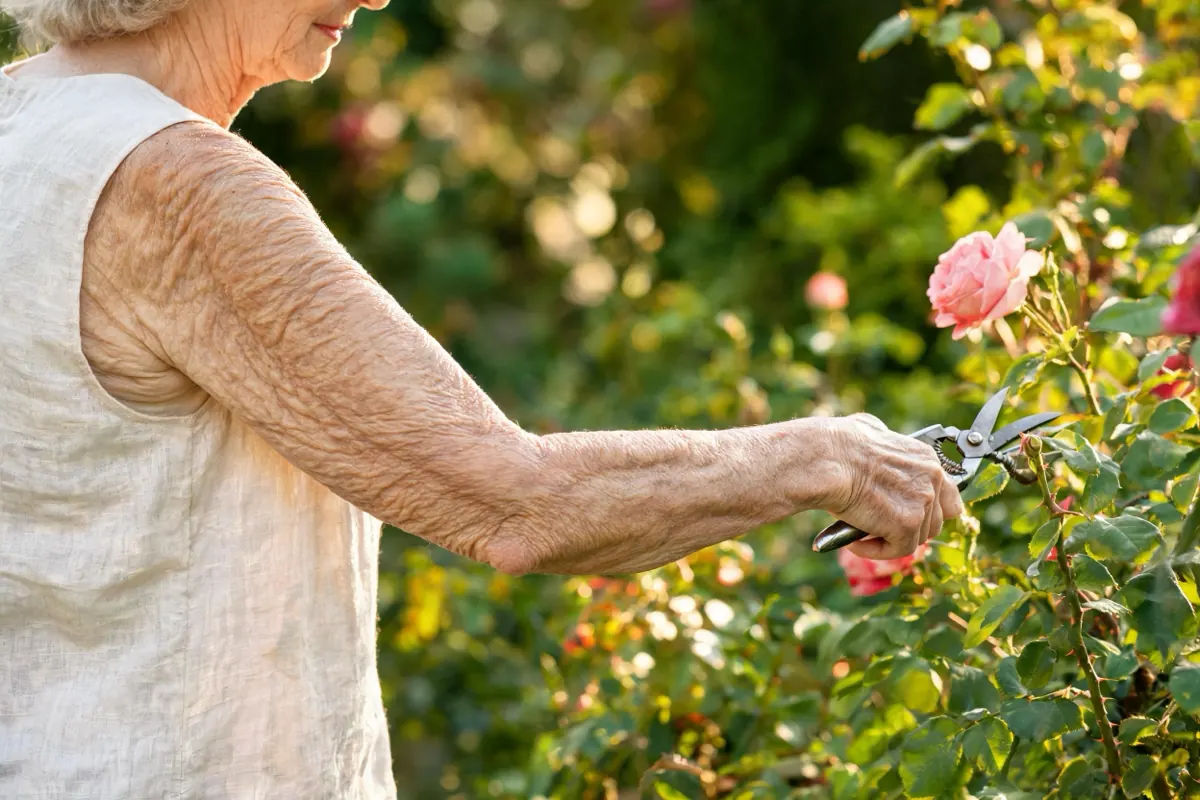
"Paper-thin" is how many people describe their forearms and hands after 70. It's an accurate picture: the skin has lost much of its thickness and cushioning.
What paper-thin skin looks like
- Translucent — veins, tendons and sometimes bones show through
- Crinkly like tissue paper, especially when pinched or moved
- Shiny in places, sometimes with white star-shaped scars from old tears
- Purple patches and brown stains on forearms
- Easily torn by tape, pets or bumps
Why skin becomes paper-thin
| Cause | What happens |
|---|---|
| Aging | Less collagen, thinner layers, less fat padding [1] |
| Sun | UV breaks down collagen and elastin [2] |
| Steroids | Long-term prednisone, inhalers, strong creams thin the skin [4] |
| Dryness | Brittle skin cracks more easily |
When thinning, purpura and tears occur together, doctors may call it dermatoporosis [3].
The risks
Paper-thin skin isn't dangerous itself, but it leads to:
- easy bruising and senile purpura
- skin tears from minor knocks — see skin tears
- slow healing of small wounds
Gentle daily care
- Cleanse gently — lukewarm water, soap-free wash, pat dry.
- Moisturize twice a day — twice-daily moisturizer cut skin tears by almost half in aged-care residents [5].
- Sunscreen every morning on forearms and hands — daily sunscreen slowed skin aging in a 4.5-year trial [6].
- A mild retinoid a few nights a week if your skin tolerates it — retinol increased procollagen in aged skin [7].
- Long, soft sleeves and gloves for chores.
- No sticky plasters — silicone dressings only.
- Short nails, no sharp rings.
Home and handling
- Pad sharp corners, bed rails and wheelchair arms.
- If someone helps you move, they should support under your shoulders — never pull on your arms or wrists.
Products to avoid on paper-thin skin
- harsh scrubs and exfoliating brushes — they can tear fragile skin
- strong acid peels unless supervised
- fragranced lotions — more likely to irritate
- ordinary sticky plasters and tape — use silicone dressings
- very hot water — dries skin further
Products worth having at home
- fragrance-free moisturizer or ceramide cream
- broad-spectrum SPF 30+ sunscreen
- silicone dressings and a tubular bandage for skin tears
- light long-sleeved tops or padded arm protectors
Frequently asked questions
What causes paper-thin skin on arms?
Mostly aging and decades of sun, sometimes long-term steroid use. The forearms are among the most sun-exposed areas, which is why thinning shows there first.
Can paper-thin skin be improved?
Yes, partly. Retinoids, alpha-hydroxy acids, sunscreen and moisturizing can make skin more resilient over months.
What is the best moisturizer for paper-thin skin?
A fragrance-free cream or lotion, ideally with ceramides, used twice daily. Consistency matters more than brand.
Why does paper-thin skin tear so easily?
The layers of the skin are thinner and less firmly attached, so a shearing force can separate them.
Is paper-thin skin a vitamin deficiency?
Usually not. It's mostly aging and sun damage. Severe vitamin C deficiency can make skin fragile and bruise easily, but it's uncommon with a varied diet. A doctor can check if your diet is very limited.
Does drinking more water help thin skin?
Staying hydrated supports general health, but drinking extra water won't thicken skin. Moisturizing the skin itself, twice a day, makes a more visible difference.
Sources
- Aging changes in skin — MedlinePlus Medical Encyclopedia.
- Rittié L, Fisher GJ Natural and sun-induced aging of human skin. Cold Spring Harbor Perspectives in Medicine, 2015. PubMed 25561721
- Kaya G, Saurat JH Dermatoporosis: a chronic cutaneous insufficiency/fragility syndrome. Dermatology, 2007. PubMed 17911985
- Prednisone — Drug Information — MedlinePlus.
- Carville K, et al. The effectiveness of a twice-daily skin-moisturising regimen for reducing the incidence of skin tears. International Wound Journal, 2014. PubMed 25040325
- Hughes MC, et al. Sunscreen and prevention of skin aging: a randomized trial. Annals of Internal Medicine, 2013. PubMed 23732711
- Kafi R, et al. Improvement of naturally aged skin with vitamin A (retinol). Archives of Dermatology, 2007. PubMed 17515510
General information, not medical advice. Written by the Reunoa editorial team; Reunoa makes Bruise Defense & Repair Serum. See our editorial policy for how we pick sources and keep product mentions fair.