Prednisone side effects on the skin: bruising, thinning and what helps
 By Margaret Hale, Reunoa EditorialLast updated
The short answer
Prednisone can affect the skin in several ways: thin, fragile skin; easy bruising and red or purple blotches; slower healing of cuts and bruises; acne; and stretch marks. These are more likely with higher doses or use over weeks to months. Keep taking prednisone exactly as prescribed — never stop suddenly — and ask your doctor about the lowest effective dose and skin protection.
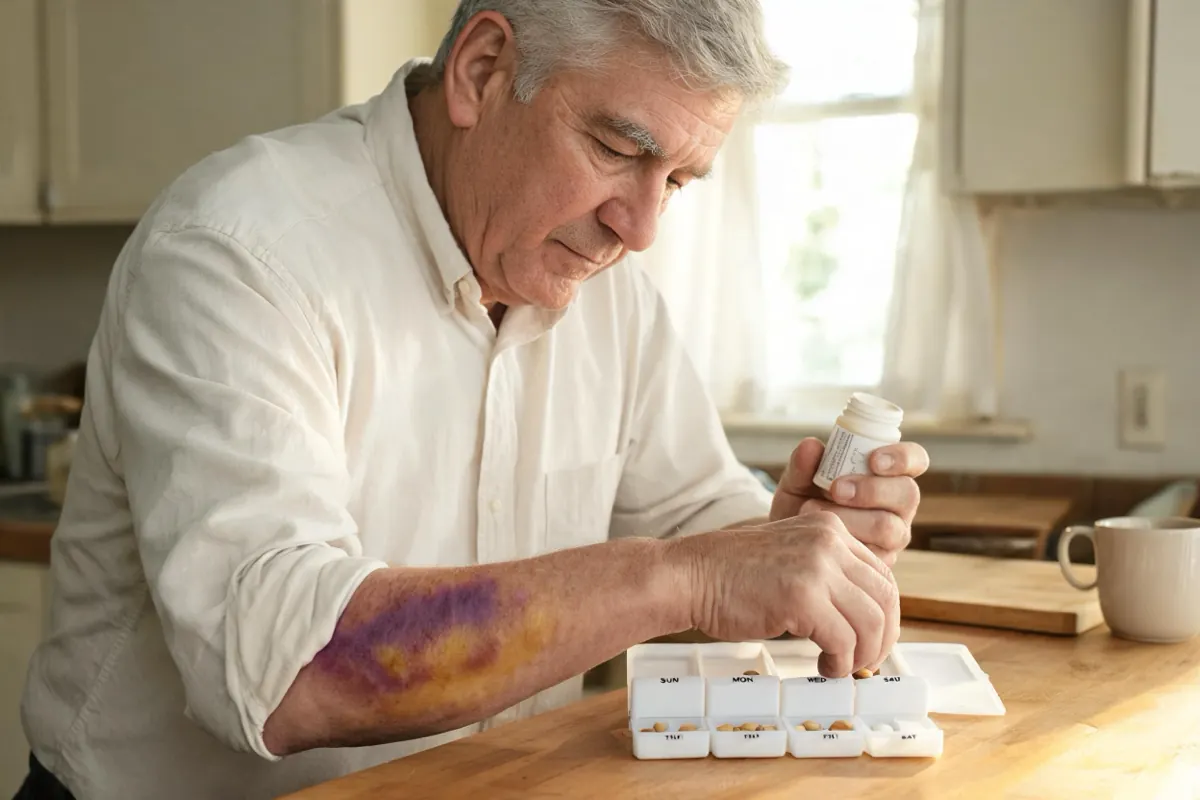
Prednisone (and prednisolone) is prescribed for flares of arthritis, asthma, COPD, polymyalgia rheumatica, inflammatory bowel disease and many other conditions. Short courses rarely change the skin noticeably. Longer courses often do.
Skin side effects of prednisone
MedlinePlus lists these skin-related effects among prednisone side effects [1]:
- thin, fragile skin
- red or purple blotches or lines under the skin
- slowed healing of cuts and bruises
- acne
- increased hair growth
- changes in how fat is distributed (fuller face, upper back)
Prednisone bruising typically shows as large purple patches on the forearms and backs of the hands from minor knocks — very similar to senile purpura, and often on top of it in older adults.
How likely is it?
It depends mainly on:
- dose — higher daily doses carry more risk
- duration — weeks to months or longer
- age — older, sun-damaged skin is already thinner
- other medicines — blood thinners or aspirin make bruises larger
Short courses of a few days rarely cause lasting skin changes.
Does it go away?
Bruising tendency and thinning often improve gradually after the dose is reduced or the course ends, but changes built up over long treatment may persist to some degree — especially combined with sun damage. More: does steroid skin thinning reverse?
Protecting your skin while on prednisone
- Moisturize forearms, hands and shins twice daily — this cut skin tears by almost half in older adults [4].
- Long sleeves and gloves for chores.
- Sunscreen on exposed skin.
- Avoid tape on skin; use silicone dressings for cuts.
- Ask about topical retinoids to support collagen once your doctor agrees [5].
- Eat enough protein — healing is slower on steroids.
Prednisone and bruising with blood thinners
Many older adults take prednisone alongside a blood thinner or aspirin. The combination makes bruises bigger: prednisone thins the skin, and the blood thinner lets more blood escape. That's expected, but it also means a fall or head knock needs medical attention. Keep taking both as prescribed, protect your forearms with sleeves and moisturizer, and mention new or unusual bruising at your next visit.
Long-term prednisone: questions for your doctor
- Can we lower the dose or plan a taper?
- Is there a steroid-sparing treatment for my condition?
- Should I take calcium and vitamin D for my bones while on prednisone?
- What should I do about skin tears?
Frequently asked questions
Does prednisone cause bruising?
Yes. Prednisone can make skin thinner and more fragile, causing easy bruising and purple blotches, especially with longer use or higher doses.
How long after stopping prednisone does skin improve?
Often over weeks to months, depending on dose and duration. Long-standing thinning may not completely reverse.
Can prednisone cause skin tears?
Yes, by thinning the skin. Protect your arms and legs, moisturize twice daily, and avoid tape on the skin.
What can I put on prednisone bruises?
A wrapped cold pack in the first day, then gentle moisturizer. Bruise products with arnica, vitamin K or ceramides on unbroken skin act locally.
Sources
- Prednisone — Drug Information — MedlinePlus.
- Topical steroids (corticosteroid creams) — DermNet.
- Barnes L, et al. Topical corticosteroid-induced skin atrophy: a comprehensive review. Drug Safety, 2015. PubMed 25862024
- Carville K, et al. The effectiveness of a twice-daily skin-moisturising regimen for reducing the incidence of skin tears. International Wound Journal, 2014. PubMed 25040325
- Kafi R, et al. Improvement of naturally aged skin with vitamin A (retinol). Archives of Dermatology, 2007. PubMed 17515510
- Bleeding into the skin — MedlinePlus Medical Encyclopedia (U.S. National Library of Medicine).
General information, not medical advice. Written by the Reunoa editorial team; Reunoa makes Bruise Defense & Repair Serum. See our editorial policy for how we pick sources and keep product mentions fair.