Why do hands bruise so easily with age?
 By Margaret Hale, Reunoa EditorialLast updated
The short answer
The backs of the hands bruise easily with age because the skin there is naturally thin, has very little fat underneath, and has had more sun exposure than almost anywhere else on the body. Small vessels lose their support and break with light knocks. Blood thinners and aspirin make the bruises bigger. Gloves, moisturiser and sunscreen help protect them.
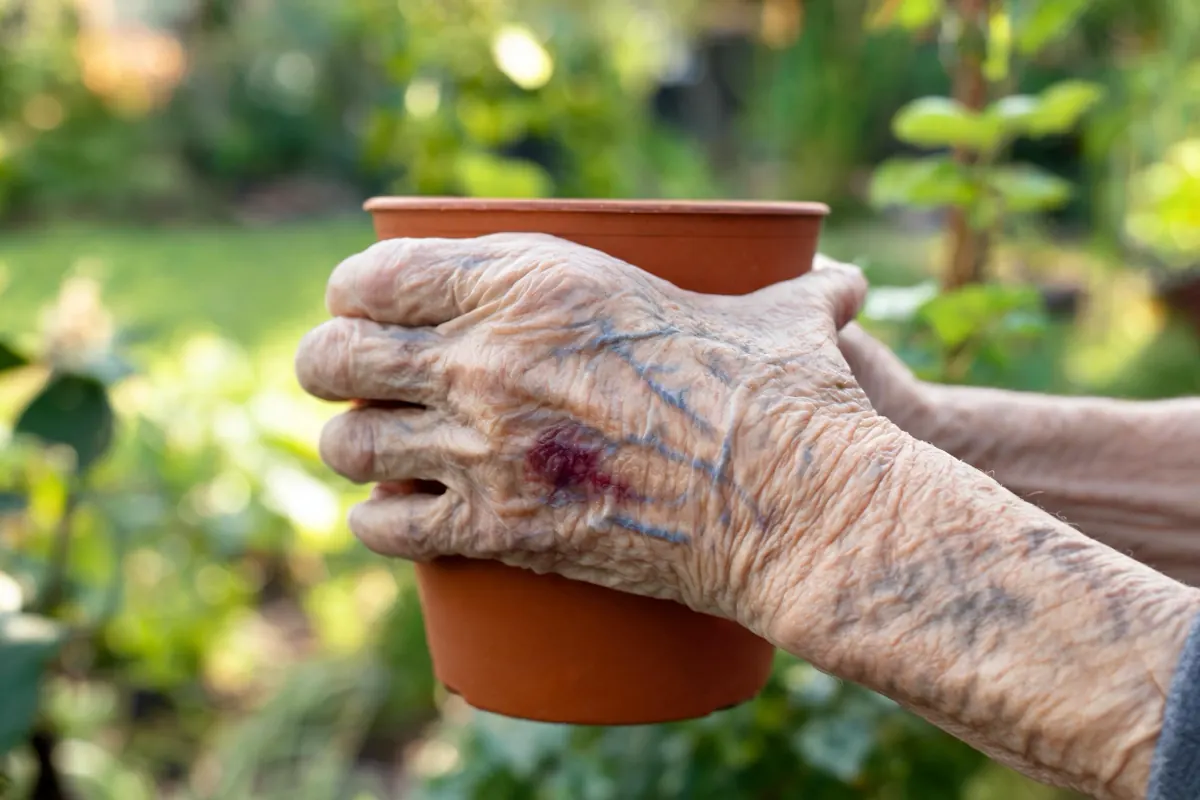
Look at the back of your hand and you'll see why it bruises so easily: the skin is thin, the veins are right under the surface, and there's almost nothing cushioning them. In our anonymous quiz of U.S. adults over 55, 74% said their bruises appear mainly on the forearms and backs of the hands [7].
Five reasons hands bruise so easily
- Naturally thin skin. The skin on the back of the hand is among the thinnest on the body — and it gets thinner with age [1].
- Almost no fat padding. The fat layer under the skin shrinks with age, and the hands had very little to begin with [1].
- A lifetime of sun. Hands are exposed every day — driving, gardening, walking. UV breaks down the collagen that supports small vessels [3].
- Constant use. Hands knock into cupboards, car doors, tools and pets more than any other body part.
- Senile purpura. The backs of the hands are, with the forearms, the classic place for the flat, dark-purple patches of senile (actinic) purpura [2].
Add a blood thinner or daily aspirin, and each small leak becomes a visible bruise.
How to protect your hands
| Habit | Why it helps |
|---|---|
| Gloves for gardening, housework and carrying | Physical barrier against scrapes and knocks |
| Moisturise twice daily, especially after washing | Supple skin is less likely to tear; twice-daily moisturising cut skin tears by almost half in one trial [4] |
| Sunscreen on the backs of hands | Slows further collagen damage [5] |
| Lukewarm water and mild soap | Hot water and harsh soap strip oils |
| Rings and watches with smooth edges | Avoid scratches on thin skin |
| Careful with tape and plasters | Sticky plasters can tear skin — use paper tape or silicone dressings |
After a knock on the hand
Use a wrapped cold pack for up to 15 minutes, raise the hand on a cushion, and avoid rubbing. Then use gentle warmth after 48 hours. Topical arnica or vitamin K can help bruises fade. See how to get rid of bruises faster.
Frequently asked questions
Why do the backs of my hands bruise so easily?
Because the skin there is thin, has very little fat padding and has had decades of sun exposure, so the small blood vessels lose their support and break with light contact. Blood thinners and aspirin make the bruises larger.
Are purple spots on the back of the hands serious?
Usually not. Flat purple patches on the backs of the hands and forearms are typically senile purpura — harmless but a sign of fragile skin. See a doctor if spots appear elsewhere or come with other bleeding.
How can I strengthen the skin on my hands?
Moisturise twice daily with a ceramide product, use sunscreen on the backs of your hands, wear gloves for chores and consider a gentle retinoid at night if your skin tolerates it.
Do blood thinners cause bruises on hands?
They don't cause the thin skin, but they make each small leak bigger and easier to see. Many people on blood thinners notice bruises mostly on their hands and forearms. Keep taking them as prescribed.
Sources
- Aging changes in skin — MedlinePlus Medical Encyclopedia.
- Senile purpura — DermNet (New Zealand).
- Rittié L, Fisher GJ Natural and sun-induced aging of human skin. Cold Spring Harbor Perspectives in Medicine, 2015. PubMed 25561721
- Carville K, et al. The effectiveness of a twice-daily skin-moisturising regimen for reducing the incidence of skin tears. International Wound Journal, 2014. PubMed 25040325
- How to select a sunscreen — American Academy of Dermatology.
- Bleeding into the skin — MedlinePlus Medical Encyclopedia (U.S. National Library of Medicine).
- Fragile Skin Report 2027 — aggregated, anonymous answers from the Reunoa skin quiz — Reunoa Editorial (learn.reunoa.com).
General information, not medical advice. Written by the Reunoa editorial team; Reunoa makes Bruise Defense & Repair Serum. See our editorial policy for how we pick sources and keep product mentions fair.