Does ibuprofen cause bruising?
 By Margaret Hale, Reunoa EditorialLast updated
The short answer
Ibuprofen can make bruising more likely. Like other NSAIDs, it temporarily makes platelets less sticky and can cause bleeding, mainly in the stomach. An occasional dose rarely causes visible bruises on its own, but regular use — especially together with blood thinners, aspirin or steroids, or after 60 — adds to easy bruising and bleeding risk.
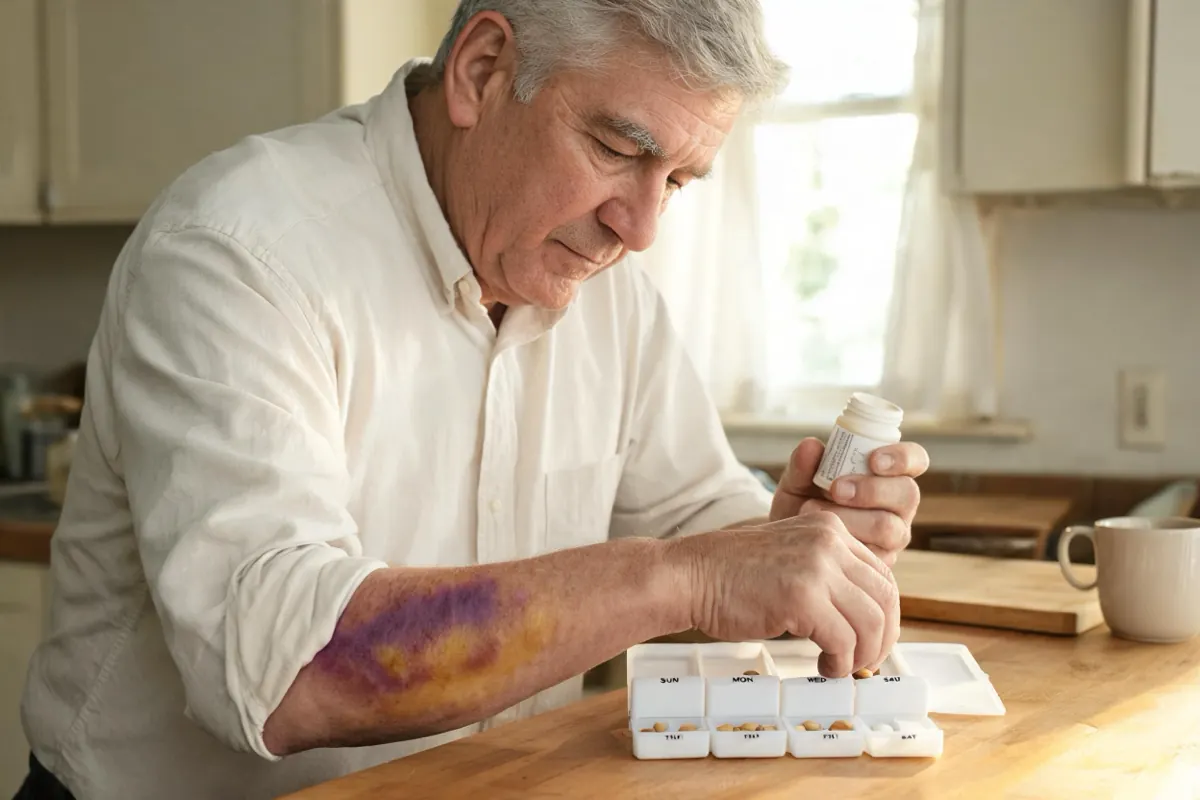
Ibuprofen (Advil, Motrin) is one of the most-used pain relievers for arthritis, back pain and headaches. If you take it often and notice more bruises, it's a fair question whether the two are linked.
How ibuprofen affects bruising
Ibuprofen is a non-steroidal anti-inflammatory drug (NSAID). NSAIDs reduce the chemicals that make platelets clump together. Unlike aspirin, ibuprofen's effect is reversible and wears off as the drug leaves your body — but while it's active, small vessel leaks take a little longer to seal. MedlinePlus warns that NSAIDs such as ibuprofen may cause ulcers and bleeding in the stomach and intestine [1].
On its own, an occasional dose rarely makes a visible difference. It matters more when:
- you take it daily or several times a day for arthritis or pain
- you are over 60, with thinner skin and more fragile vessels [6]
- you also take a blood thinner or aspirin
- you take steroids or certain antidepressants (SSRIs), which also add to bleeding risk
Ibuprofen with blood thinners
This is the combination to be careful with. The drug information for apixaban (Eliquis) and warfarin lists NSAIDs like ibuprofen among the medicines that increase bleeding risk [2] [3]. The NHS advises not to take ibuprofen with clopidogrel unless a doctor has said it's OK, and notes paracetamol (acetaminophen) can be taken with it [4].
If you're on any blood thinner, ask your doctor or pharmacist before taking ibuprofen — even an over-the-counter dose, and even as a gel if using large amounts.
Safer pain relief options to ask about
- Acetaminophen (Tylenol, paracetamol) — doesn't affect platelets; stay within the daily maximum on the label, lower if you drink alcohol or have liver problems.
- Topical NSAID gels (e.g., diclofenac gel) for joint pain — much less reaches the blood than with tablets; ask if suitable with your medicines.
- Heat, gentle exercise, physiotherapy for chronic joint and back pain.
Always check with your pharmacist; the right choice depends on your kidneys, stomach and heart health.
Is it the ibuprofen — or something else?
Easy bruising after 60 usually has several causes at once: thin, sun-aged skin, blood thinners, steroids and sometimes low vitamin levels. Read why do I bruise so easily? for the full list.
Frequently asked questions
Can ibuprofen cause bruising?
Yes, it can contribute. Ibuprofen temporarily reduces platelet stickiness and can cause bleeding. Regular use, older age and combining it with blood thinners or aspirin increase the effect.
Does ibuprofen thin your blood like aspirin?
Partly. Both affect platelets, but ibuprofen's effect is temporary and wears off within about a day, while aspirin's lasts for the life of the platelet. Ibuprofen is not a substitute for prescribed aspirin.
Can I take ibuprofen with Eliquis or Xarelto?
Ask your doctor or pharmacist first. NSAIDs like ibuprofen increase bleeding risk with anticoagulants. Acetaminophen is usually the preferred option.
Will bruising stop if I stop taking ibuprofen?
If ibuprofen was contributing, bruising tendency should improve within a few days, because its effect on platelets is short-lived. Other causes like thin skin will remain.
Is ibuprofen gel safer for people who bruise easily?
Gels deliver much less of the drug into the bloodstream than tablets, so the effect on bleeding is smaller. Still ask your pharmacist if you're on a blood thinner.
Sources
- Ibuprofen — Drug Information — MedlinePlus.
- Apixaban — Drug Information — MedlinePlus.
- Warfarin — Drug Information — MedlinePlus.
- Clopidogrel — NHS.
- Bleeding into the skin — MedlinePlus Medical Encyclopedia (U.S. National Library of Medicine).
- Aging changes in skin — MedlinePlus Medical Encyclopedia.
General information, not medical advice. Written by the Reunoa editorial team; Reunoa makes Bruise Defense & Repair Serum. See our editorial policy for how we pick sources and keep product mentions fair.