Bruising on Eliquis (apixaban): what's normal, what's not and what helps
 By Margaret Hale, Reunoa EditorialLast updated
The short answer
Yes, bruising more easily is a common side effect of Eliquis (apixaban): bruises appear from smaller knocks and take longer to fade. That means the medicine is working. In the large ARISTOTLE trial, apixaban caused less major bleeding than warfarin. Call your doctor for large unexplained bruises or other bleeding — and never stop Eliquis on your own.
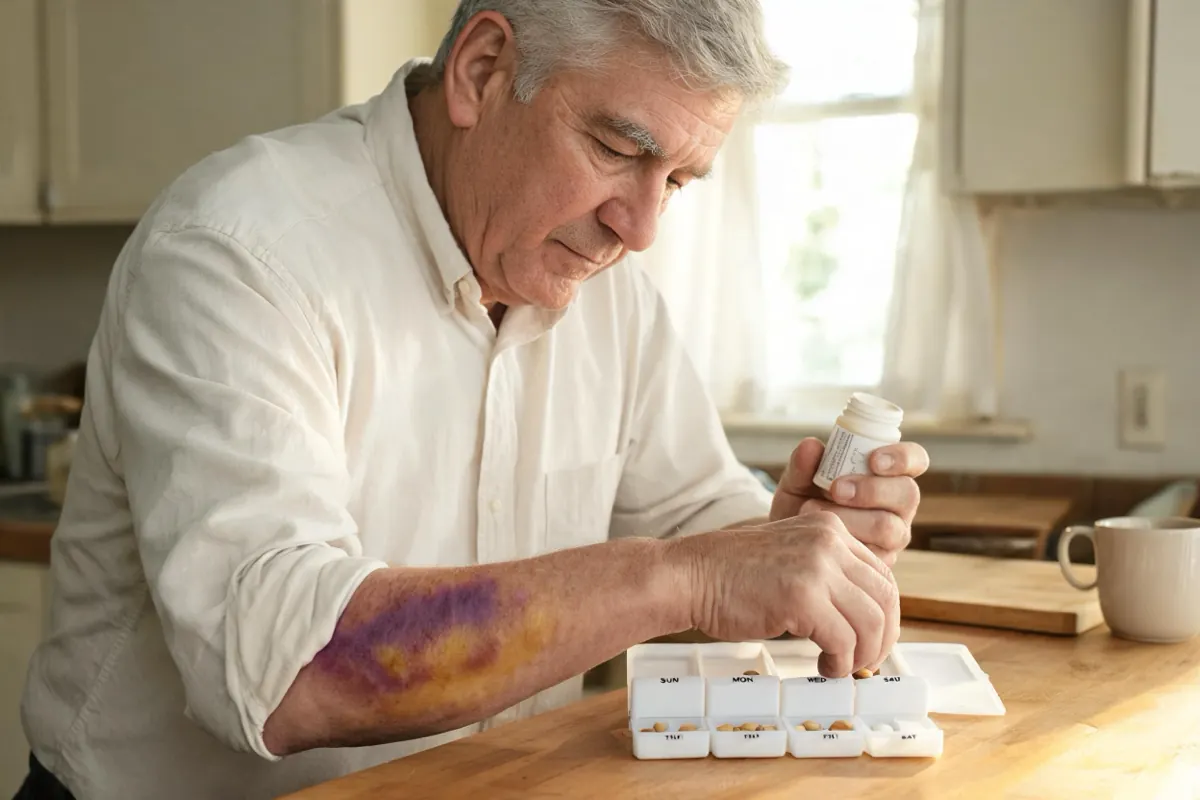
Key takeaways
- The NHS lists "bruises that come up more easily and take longer to fade" as a common apixaban side effect [1].
- In ARISTOTLE (18,000+ patients), major bleeding was 2.13% per year on apixaban vs 3.09% on warfarin [3].
- Stopping Eliquis without medical advice raises the risk of stroke and clots [2].
- Painkillers like ibuprofen, aspirin and some supplements add to the bruising effect [2].
- Moisturizing, sleeves and protecting forearms reduce the bumps that cause bruises.
On this page
Eliquis (apixaban) is one of the most prescribed blood thinners for atrial fibrillation and after blood clots in the legs or lungs. Many people notice the same thing within weeks of starting it: new bruises on the forearms, hands and shins that they can't remember getting.
Why Eliquis causes bruising
Apixaban blocks factor Xa, a key step in forming a blood clot. That is exactly how it prevents strokes — and it also means a tiny leak from a capillary takes longer to seal. On thin, older skin with fragile vessels [7], everyday bumps become visible bruises.
The NHS lists bleeding more than usual as a common side effect, including "bruises that come up more easily and take longer to fade than usual", bleeding longer from cuts, nosebleeds and bleeding gums [1].
How common is it — and is Eliquis worse than warfarin?
Easy bruising is common on every anticoagulant. Serious bleeding is far less common. In the ARISTOTLE trial of more than 18,000 people with atrial fibrillation, major bleeding occurred at 2.13% per year with apixaban versus 3.09% with warfarin, and apixaban also prevented strokes slightly better [3]. A large 2022 meta-analysis of the newer anticoagulants (DOACs) confirmed less intracranial bleeding than warfarin overall [4].
So: switching from warfarin to Eliquis does not make you a "bad bruiser" — the bruises are a normal sign of anticoagulation.
Normal Eliquis bruises vs warning signs
| Usually normal | Get medical advice |
|---|---|
| Small to medium bruises on forearms, hands, shins | Large bruises (bigger than your palm) without a knock |
| Bruises that take two to three weeks to fade | Bruises that keep spreading or are very painful and swollen |
| Flat purple patches on sun-aged forearms (senile purpura) | Bruising plus nosebleeds or gums that won't stop |
| Minor cuts that bleed a bit longer | Pink, red or dark urine; black or bloody stools |
Should you stop or lower your dose?
No — not on your own. Stopping apixaban early increases the risk of stroke and blood clots; the drug information carries a specific warning about this [2]. If bruising bothers you, bring it up at your next appointment. Your doctor may check:
- whether the dose fits your age, weight and kidney function
- other medicines and supplements that add to bleeding
- blood tests if bruising seems out of proportion
What adds to Eliquis bruising
- Pain relievers: ibuprofen, naproxen and aspirin (unless prescribed) increase bleeding risk [2]. Acetaminophen is usually preferred — ask your pharmacist.
- Supplements: high-dose fish oil, vitamin E, ginkgo, turmeric and garlic pills may add a little. Tell your pharmacist what you take.
- Some antidepressants (SSRIs/SNRIs) can increase bleeding tendency.
- Alcohol in larger amounts.
Skin care that helps on Eliquis
You can't change how the medicine works, but you can reduce the bumps and support the skin [5]:
- Moisturize forearms and hands twice daily — supple skin copes better with knocks.
- Wear light long sleeves for gardening, housework and with pets.
- Pad sharp corners and improve lighting at home.
- After a knock: a cold pack wrapped in cloth for 10–15 minutes, and raise the limb.
- Topical products on unbroken skin work locally and don't change how apixaban works. High-strength arnica (20%) helped bruises fade faster than placebo in a trial [8]. See is arnica safe with blood thinners?
More practical steps: how to stop bruising on blood thinners.
Frequently asked questions
Is it normal to bruise easily on Eliquis?
Yes. Bruising more easily and bruises taking longer to fade are common side effects of apixaban. Get medical advice for very large, unexplained or painful bruises or other bleeding.
Does Eliquis cause more bruising than warfarin?
Not usually. In the ARISTOTLE trial, apixaban caused less major bleeding than warfarin. Everyday bruising happens on both.
How long do bruises last on Eliquis?
Often two to three weeks, sometimes longer on thin forearm skin. Brown marks can remain for weeks after the purple fades.
Can I take ibuprofen with Eliquis?
Ibuprofen and other NSAIDs increase bleeding risk with apixaban. Ask your doctor or pharmacist before using them; acetaminophen is usually the preferred pain reliever.
Can I use bruise cream while taking Eliquis?
Creams and serums applied to unbroken skin act locally and don't change how apixaban works. Avoid open wounds and ask your pharmacist if unsure.
Sources
- Apixaban — side effects — NHS.
- Apixaban — Drug Information — MedlinePlus.
- Granger CB, et al. Apixaban versus warfarin in patients with atrial fibrillation (ARISTOTLE). New England Journal of Medicine, 2011. PubMed 21870978
- Carnicelli AP, et al. Direct Oral Anticoagulants Versus Warfarin in Patients With Atrial Fibrillation: Patient-Level Network Meta-Analyses of Randomized Clinical Trials. Circulation, 2022. PubMed 34985309
- Blood Thinners — MedlinePlus (U.S. National Library of Medicine).
- Bleeding into the skin — MedlinePlus Medical Encyclopedia (U.S. National Library of Medicine).
- Aging changes in skin — MedlinePlus Medical Encyclopedia.
- Leu S, et al. Accelerated resolution of laser-induced bruising with topical 20% arnica: a rater-blinded randomized controlled trial. British Journal of Dermatology, 2010. PubMed 20412090
General information, not medical advice. Written by the Reunoa editorial team; Reunoa makes Bruise Defense & Repair Serum. See our editorial policy for how we pick sources and keep product mentions fair.