Why do I bruise so easily on my legs?
 By Margaret Hale, Reunoa EditorialLast updated
The short answer
Legs bruise easily because the shins have almost no padding and get bumped more than any other area — by furniture, car doors and stairs. After 50, thin skin, vein problems, blood thinners and aspirin make it worse. Bruises on the legs plus pinpoint red dots, bleeding gums, swelling in one leg or feeling unwell need a doctor's check.
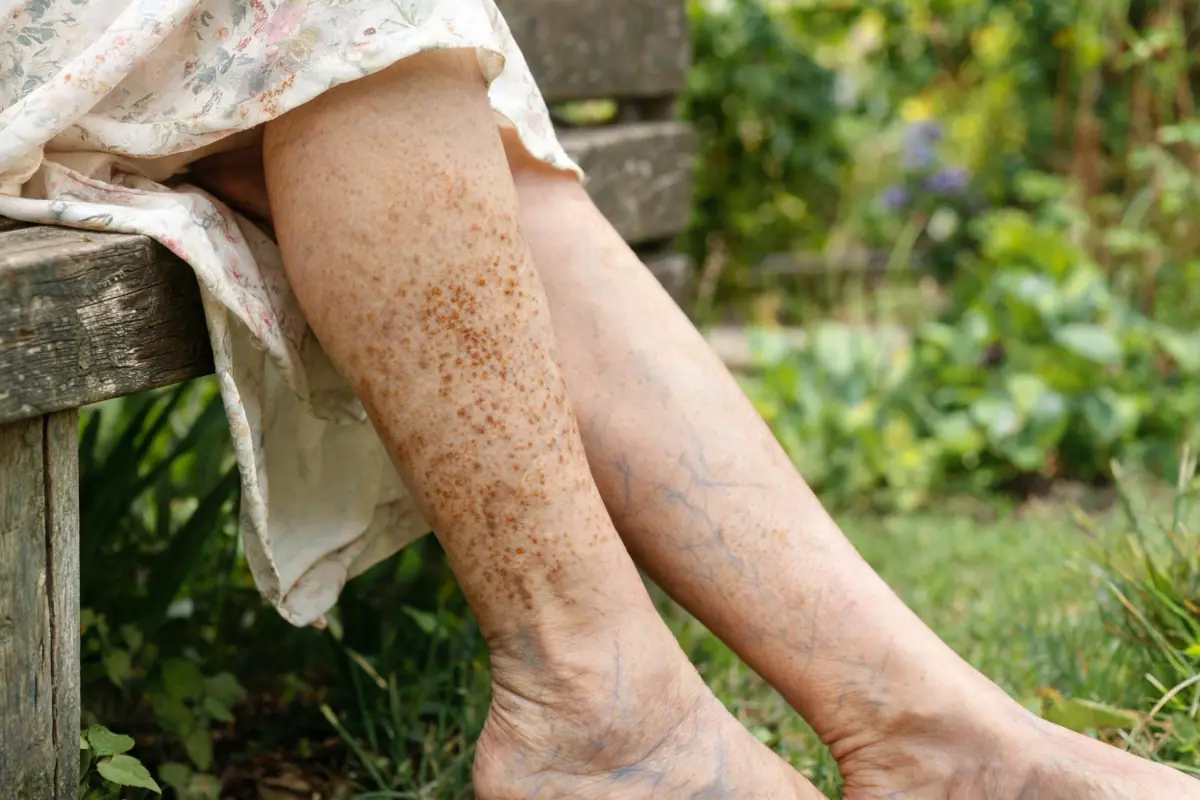
Shins are bruise magnets. Coffee tables, bed frames, car doors, the dishwasher door — legs take hits all day, often without you noticing. In older adults, nearly 90% of accidental bruises are on the arms and legs [1].
Common reasons legs bruise easily
Shins have no cushion
Skin sits directly on the shinbone, with very little fat or muscle between. Even a light bump squeezes vessels against bone.
Aging skin
Thinner skin and less fat padding leave vessels more exposed [2].
Vein problems
When leg veins don't work well (chronic venous insufficiency), blood pools and pressure in small vessels rises. Skin on the lower legs can become fragile, discoloured and slow to heal [3]. Over time, this often leaves brown staining — see hemosiderin staining on legs.
Blood thinners and aspirin
They make every leak bigger and longer-lasting [4].
Other medicines and supplements
Steroids, NSAIDs, some antidepressants and supplements like fish oil and vitamin E can add to bruising.
Less common causes
- Low platelets or clotting problems — often with pinpoint dots (petechiae) on the lower legs [5]
- Vitamin C deficiency — bruising, bleeding gums, poor wound healing
- Liver disease
- Inflamed blood vessels (vasculitis) — raised purple spots on the lower legs [5]
A doctor can check these with simple blood tests [6].
Legs on blood thinners
On anticoagulants or antiplatelets, shins bruise especially easily because there's no padding over the bone. Bruises are larger and take longer to fade. That's expected. But be alert to two things that need a doctor: a bruise that keeps spreading or becomes very tense and painful (a hematoma), and swelling of one whole calf, which can mean a blood clot even on blood thinners.
Bruising and leg swelling
If your ankles swell by evening, small vessels in the lower legs are under more pressure. Knocks there leave larger marks, and brown staining builds up over time. Compression stockings (after checking with your doctor), raising your legs and walking help both swelling and skin.
Normal vs see a doctor
| Usually normal | See a doctor |
|---|---|
| Bruises on shins and knees from bumps | Pinpoint red dots on lower legs |
| Bruises fading over 2–3 weeks | Raised, itchy or painful purple spots |
| More bruising on blood thinners | One leg suddenly swollen, warm, painful (possible clot — same day) |
| Brown marks after many bruises | Bruising with bleeding gums, nosebleeds, tiredness |
What helps
- Pad the hotspots — corners of beds, coffee tables, car door sills.
- Light trousers or knee-high socks as a buffer.
- Good lighting at night to avoid bumps.
- Moisturize shins — they're often the driest skin on the body.
- For vein problems: ask about compression stockings and leg elevation.
- Medication review if bruising increased with a new medicine.
Frequently asked questions
Why do I get bruises on my legs without hitting anything?
Usually you did hit something but didn't notice — shins bruise from very light knocks. Blood thinners, thin skin and vein problems make it more likely. Pinpoint dots or bruising elsewhere should be checked.
Can poor circulation cause bruising on legs?
Venous insufficiency makes lower-leg skin fragile and prone to discoloration. It doesn't cause classic bruises directly but contributes to easy marking and brown staining.
What does it mean when your legs bruise easily?
Most often thin skin plus frequent bumps, sometimes medicines. Less commonly, low platelets, vitamin deficiency or liver disease.
Should I worry about bruises on my legs?
Not usually. Worry if they come with pinpoint dots, raised spots, other bleeding, swelling in one leg, or if you feel unwell.
Sources
- Mosqueda L, Burnight K, Liao S The life cycle of bruises in older adults. Journal of the American Geriatrics Society, 2005. PubMed 16078959
- Aging changes in skin — MedlinePlus Medical Encyclopedia.
- Venous insufficiency — MedlinePlus Medical Encyclopedia.
- Blood Thinners — MedlinePlus (U.S. National Library of Medicine).
- Purpura — MedlinePlus Medical Encyclopedia.
- Ballas M, Kraut EH Bleeding and bruising: a diagnostic work-up. American Family Physician, 2008. PubMed 18481559
- Bleeding into the skin — MedlinePlus Medical Encyclopedia (U.S. National Library of Medicine).
General information, not medical advice. Written by the Reunoa editorial team; Reunoa makes Bruise Defense & Repair Serum. See our editorial policy for how we pick sources and keep product mentions fair.